

 In Stock

 Low Stock
Gold has a reputation for being reliable and hard to fake, which is why it’s always a bit uncomfortable when the opposite turns out to be true.
In recent years, a series of high-profile cases have exposed how sophisticated gold fraud can be – even at institutional levels.
In one widely reported scandal, banks in China accepted gold bars as collateral for billions of dollars in loans. Everything looked as it should; the bars had the right markings and the paperwork checked out. Only later did investigators discover that many of them were copper alloys coated in gold. The scandal prompted lawsuits and industry scrutiny over existing verification processes.
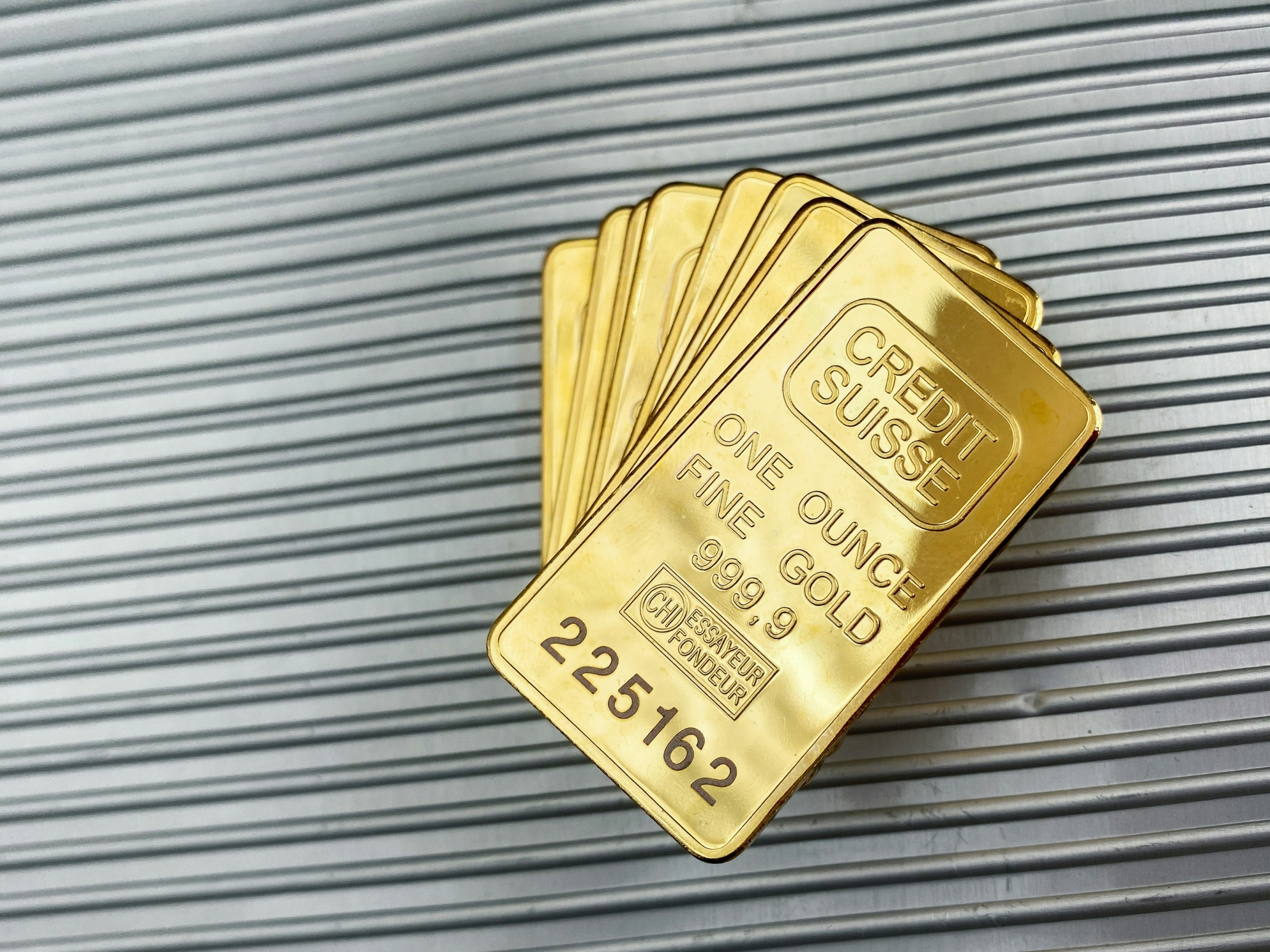
In 2019, counterfeit gold bars stamped with the logos of well-known Swiss refineries were found circulating in global markets. Some even made their way into secure storage – including at major institutions such as JPMorgan – before anyone realised they weren’t genuine. Again, these weren’t crude fakes, they were good enough to pass initial checks and raise very few eyebrows.
More recently, regulators and industry bodies have issued warnings about fake bullion and jewellery appearing more frequently as demand for physical gold has risen. When prices climb and interest increases, fraud tends to follow close behind.
The common thread in all of this, is that the existing, established checks didn’t spot the irregularities. In most cases, it took deeper analysis to uncover the truth.
Is gold fraud on the rise?
Gold fraud isn’t anything new, but it does and is evolving. As gold prices rise, so does the incentive to fake it. Today’s fraud is more polished, more international and which means it can slip through the cracks. That shrinking margin for error is why traditional checks on their own don’t always cut it. When better tools exist, it makes sense to use them, and that’s where AI technology comes in.
Common types of gold fraud
Fake bars and coins
Some counterfeits are very convincing – familiar branding, markings and serial numbers which can pass as genuine to an untrained eye (and sometimes even a trained one).
Purity issues
This is where gold looks right on the surface but isn’t what it claims to be underneath. Plated bars or mixed alloys can slip through basic checks if you don’t test beyond the outer layer.
Weight tampering
This is more unusual – gold is particularly dense and therefore heavy, so if it doesn’t weigh as expected then – usually – someone notices. But it’s not impossible to tamper with weight. There have been cases of hollow bars – or bars filled with other dense metals – which weigh exactly what they ‘should’, at least on a scale.
Fake paperwork
Paperwork creates confidence, which is why it’s often targeted. If the documents look right, people are more likely to trust the metal. But certificates, assay reports and hallmarks can all be copied or altered.
How AI helps spot fake gold
AI is already doing a lot of heavy lifting across industries. It’s helping banks flag fraud, hospitals reduce diagnostic errors, insurers spot false claims and border agencies detect document forgery. The common thread is scale. While human judgement might be accurate when extremely focused, you can’t expect a human to have the capacity nor the time to do vast checks at scale. But that’s exactly where AI starts can really help.
Image recognition and visual analysis
One of the most practical ways AI is already being used in gold verification is simply by looking more closely than people can. High-resolution images of bars, coins and jewellery are checked against large libraries of known genuine items.
AI goes further than looking at familiar branding – it looks for details such as:
- Engravings which are off by a fraction
- Hallmarks which sit in the wrong place or are the wrong depth
- Surface patterns or finishes which don’t quite line up with how real gold should look
To a human eye, these differences can be almost invisible. To an algorithm that has seen thousands of genuine examples, they stand out straight away. Instead of relying on one person’s judgement, every item is quietly compared against a huge reference set in seconds.
Spectral and material analysis
AI also works alongside tools which analyse what gold is actually made of, rather than what it looks like.
Techniques such as X-ray fluorescence and mass spectrometry read the metal’s composition and produce detailed data about its contents. AI then checks those readings against what pure gold or specific alloys should look like and flags anything that doesn’t sit within expected ranges.
That makes it much easier to spot things like:
- Hidden impurities
- Thin layers of gold plating over cheaper metals
- Substitutions designed to look right on the outside but fail at the core
Weight and density checks
Gold has very specific physical properties, especially its density, which is notoriously difficult to fake convincingly.
AI can connect directly to precision scales and density testing tools, learning what “normal” looks like for genuine bars, coins and jewellery in different sizes and formats. When something is even slightly off, it’s flagged immediately.
This is particularly effective at uncovering:
- Hollowed bars
- Tungsten-filled cores
- Jewellery that has been altered to add weight without adding gold
AI and transaction fraud
Not all gold fraud looks like fake bars and forged hallmarks. AI can also be used to monitor transaction behaviour across gold buying and selling platforms, looking for patterns which don’t fit normal activity. Where a human might have to look at one transaction at a time, AI looks at behaviour over time and asks: does this activity make sense?
For example, imagine if someone who usually sells the odd piece of jewellery suddenly starts moving large volumes of gold. Or a brand-new account appears and begins trading heavily straight away. Of course there’s nothing illegal about that on its own, but it’s enough to warrant a closer look.
Another common pattern is lots of small transactions, spread out just enough to avoid attention. To a human, each sale looks harmless. To AI, the repetition stands out.
It can also spot behaviour which feels out of step with the wider market. Heavy selling when prices are steady, or unusual buying when demand is otherwise quiet, can signal something more than normal trading.
Then there are cases where gold is bought in one place, sold quickly somewhere else, and the cycle repeats. Again, nothing obviously wrong if you look at each step on its own. But when you join the dots, the story starts to look odd.
AI helps by flagging these patterns early, while there’s still time to check what’s going on. This kind of early warning can make a real difference for dealers and marketplaces handling large volumes.
Blockchain and AI: tracking gold’s journey
Blockchain has been used in the gold world for several years to create a tamper-resistant record of a bar’s journey from mine to refinery, to vault and beyond. A blockchain ledger records every hand-off and custody event.
Today, AI is being layered on top of that blockchain backbone to make the whole process more bulletproof. For example, the London Bullion Market Association has explored combining optical AI with blockchain to create detailed digital profiles of bars. If a bar’s physical characteristics or history don’t line up with its recorded journey, it becomes visible very quickly.
Elsewhere, supply-chain platforms such as Peer Ledger use blockchain to map the movement of precious metals, while AI scans those records for gaps, inconsistencies or unusual handovers. Instead of relying on manual reviews, systems can flag entries that warrant closer inspection.
AI also helps in responsible sourcing. When gold passes through multiple countries, refineries and intermediaries, AI can identify patterns that suggest duplicated certificates, reused documentation or material entering the chain from unexpected sources.
In essence, blockchain keeps the record intact while AI tests whether it makes sense.
What this actually means for you as a gold buyer or seller
A lot of the talk around AI can sound distant or overly technical but there is a tangible impact if you’re buying or selling gold.
- More accurate valuations for you, because AI has cross-checked your gold against multiple measurements and known standards.
- Faster checks, because results don’t rely on manual inspection.
- Lower fraud risk, as inconsistencies that are easy to miss by eye have already been flagged.
- More transparency, since it’s easier to see how a valuation was reached, not just the final figure.
- Greater overall confidence, because decisions are based on evidence that is supported by a checked and verified algorithm.
Gold valuations and fraud detection are improving, and AI is playing a big part in that progress. It’s not perfect, but it’s strong, consistent and far better at spotting patterns and problems at scale than old and outdated traditional methods.
If you’d like to have your gold securely valued, Gold Bank has spent more than three decades helping people buy and sell with confidence, using up-to-date testing and clear, transparent pricing. See how it works at goldbank.co.uk.