

 In Stock

 Low Stock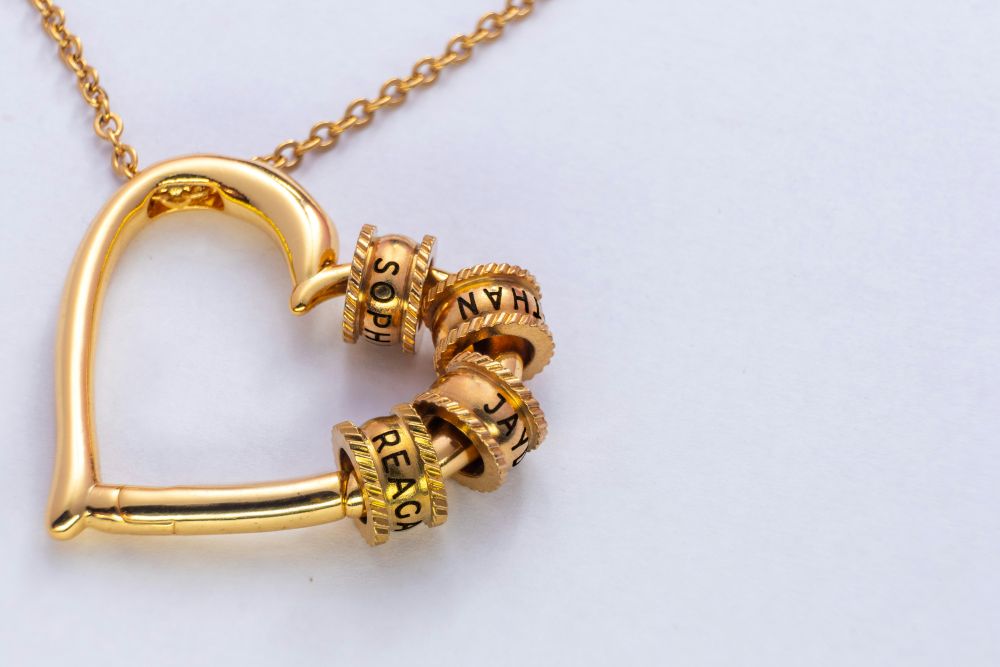
For many people, gold arrives in their lives unplanned. We’re not talking about those who’ve bought a coin, invested in a bar or logged on to purchase a Gold ETF. We’re talking about gold that’s been gifted. A ring passed down through family, a bracelet given at a wedding, or a necklace marking a birthday.
Sometimes it’s worn so often it’s on the verge of snapping, thinned by years of use. Other times it ends up in a drawer, tucked away for safekeeping, out of sight and out of mind.
However it’s been kept, gold that’s been gifted or inherited tends to carry emotional weight before its value is even considered. When we haven’t chosen it ourselves – it’s something we received, inherited or simply held onto, it helps to explain why emotional value can feel stronger than the monetary value attached to it.
This piece isn’t about pricing or process, or even about what you should do next. It’s about understanding why decisions around gold can feel so loaded in the first place, and why you might find yourself hesitating when it comes to deciding what to do with your gold.
Why gold feels harder to part with than other items
Most people don’t lose much sleep over selling a sofa or upgrading an old phone. Even people who are very attached to their cars usually find a way to move on, eventually.
Sometimes things break and get sold for parts. Sometimes they still work perfectly well but feel a bit dated, so we swap them out for something newer and more practical. And sometimes something is in absolutely fine working order, but we decide it’s time to release its value and put the money to use elsewhere.
Gold can fall into all of those categories too, but many people don’t think about it in the same way.
When the gold you own is an heirloom or carries real sentiment, if it’s gone, it’s gone! There’s no equivalent replacement waiting in the wings. That sense of finality changes how the decision feels. Selling gold can feel less like a clear-out and more like closing a door.
Add then there’s the fear of regret – that niggling worry that the decision might feel wrong later even if it makes sense now. You can see how the hesitation starts to make sense.
Resistance, in this context, isn’t irrational. It just means you still have an emotional connection to the object.
- Gold marks life’s moments
Gold often enters our lives through weddings, anniversaries, birthdays or inheritances, so it naturally becomes tied to some of life’s bigger milestones – births, throughout life and in death.
Therefore its value isn’t in how often it’s used, or what it’s made of, but in what it represents; a connection to someone or a reminder of a particular time. Perhaps it’s proof that something meaningful happened, even if life has moved on since.
- Emotional value and financial value aren’t the same thing
Your grandmother’s gold ring might be one of the most precious things you own. It might remind you of her in a hundred small ways and, to you, it’s completely irreplaceable but its value is subjective.
Gold pricing, by contrast, is precise. Spot prices are published continuously by bodies such as the London Bullion Market Association (LBMA), reflecting global supply and demand.
If you ever have to sell the ring and that ring turns out to be 8ct, the market will see it very differently. It won’t see its history – it will only see purity and weight. Financial value is indifferent to your memories sadly. You might only get £80 for it.
It feels reasonable to assume that something meaningful should also be financially significant. When the numbers don’t match the feeling, it can be jarring. But we already live with this mismatch elsewhere; old photos might be priceless to you, but they’re not worth anything to anyone else.
You don’t have to keep something forever to respect what it means. You just need to be honest about what role it still has. Gold makes that decision feel harder than most.
- Gold is kept for reassurance, rather than liquidity
Gold often gets kept for reassurance rather than any immediate plan to sell. We all know it’s seen as a store of value, and while central banks hold it as a safety net, the same instinct shows up at home too. People keep gold “just in case”, even if they’re not entirely sure what that case might be.
This explains why decisions about selling gold get delayed. It’s not necessarily out of indecision, but because it’s serving a purpose. When something provides peace of mind, there’s rarely much urgency to change it.
- Fear, uncertainty and trust
For first-time sellers, confusion around purity, weight and pricing is one of the biggest barriers to engaging with the gold market at all. Most people know the difference between carat and purity, how much of a piece is actually gold, or why two buyers can quote different prices for the same item.
Simple questions start to stack up quickly. Is this 9ct or 18ct? Does the clasp count? What happens to stones? Is the price I’m seeing online the price I’ll actually be paid? None of these are unreasonable questions, but without clear answers the process can feel opaque.
When you’re unfamiliar with how gold is tested, weighed and priced, that uncertainty tends to spill over into emotion. Gold that already carries meaning starts to feel harder to approach, and putting the decision off feels safer than engaging with something you don’t fully understand.
A survey found that over half of Brits have inherited heirlooms such as jewellery or antiques from friends or family, yet only around 40 % have ever had these items professionally valued – suggesting many people live with valuable items they don’t fully understand.
In reality, most of the anxiety comes from the mechanics being unfamiliar rather than the outcome itself. Once those mechanics are clearer, what’s being measured and why, the emotional volume drops and decisions feel easier to think about calmly.
- You need to make a decision on your terms
Letting go doesn’t have to mean acting quickly or feeling pushed into a decision. It also doesn’t have to mean that something important is being lost. In most cases, what people respond to isn’t the decision itself, but how it’s made.
The difference between regret and relief often comes down to understanding. When you know what you have, how it’s valued and what your realistic options are, the decision stops feeling like a gamble. Even if you decide not to sell, that choice feels deliberate rather than reactive.
It’s also worth recognising that not deciding straight away is still a decision. Waiting is a choice! Keeping something because it still matters to you, even if it has financial value, is a choice too. None of those are wrong.
What tends to make decisions feel heavy is uncertainty, not the act of selling or keeping gold. Once the process is clearer, the decision itself becomes easier to live with, whichever way it goes.
Practical ways to prepare emotionally before selling gold
For those moments when you start to wonder what you might do with your gold, a bit of emotional preparation can go a long way. Here’s what we find helps.
1. Separate the story from the object
Before you think about value, take a moment to acknowledge what the gold represents. Who gave it to you? When did it enter your life? Why does it matter? Doing that upfront makes things feel less uncomfortable, because you’re not pretending the emotion isn’t there.
2. Accept that mixed feelings are normal
You don’t have to feel confident or decisive straight away. Hesitation, doubt and even guilt are common when gold is sentimental. Feeling conflicted doesn’t mean selling is wrong.
3. Get clarity without committing
Learning what something is, its carat, weight or rough value, doesn’t lock you into a decision. Think of it as information gathering, not a point of no return. Knowing where you stand often makes the emotional side quieter, even if you decide to do nothing.
4. Decide what matters most before you see a number
Ask yourself what would matter more: keeping the item, or what selling it might enable. There’s no right answer, but thinking about this before seeing a price helps avoid disappointment or rushed decisions later.
5. Allow yourself time between understanding and action
There’s no rule that says you have to act immediately once you know the facts. Many people find it helpful to sit with the information for a bit. A decision made with space tends to feel better than one made under momentum.
6. Remember that selling isn’t erasing the past
Letting go of gold doesn’t undo the relationship, moment or memory attached to it. Those things don’t live in the metal. Reminding yourself of that can make the idea of selling feel less final.
7. Know that choosing not to sell is still a choice
Being “ready” doesn’t always end in a sale. Sometimes preparation simply leads to peace of mind. Keeping gold because you understand it and still want to keep it is very different from keeping it because you’re unsure.
If you have gold and you’re unsure what to do with it, Gold Bank is always happy to help you understand what you have and talk through your options, with no pressure to decide anything. Contact us through our website.