
Over the next 30 years, an estimated £5.5 to £7 trillion will pass from one generation to the next in the UK. It’s being called the great wealth transfer – the biggest financial shift in history – as assets, savings and possessions move from parents and grandparents to their children and grandchildren.
This is happening now because the Baby Boomer generation, which holds more wealth than any before it, is beginning to pass on property, pensions and investments. The decades of rising house prices have only added to the value of this transfer.
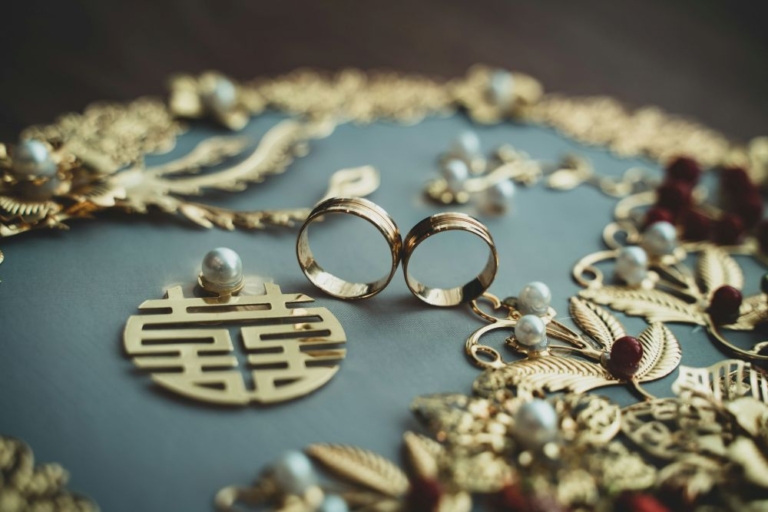
But inheritances don’t just come in the form of money, they often come as possessions – and jewellery is one of the most common.
When you inherit a piece of jewellery it can carry a great deal of emotion. If it’s been given to you from someone close it will carry stories and memories. But at the same time, the object itself might not be something you actually want, or even like.
It will likely leave you with some questions: what’s it worth? Should you keep it? Could it be turned into something new? Is now the right time to make any decision at all?
It’s a lot to process and it’s perfectly normal not to have all the answers straight away.
Here are, hopefully, some helpful questions to guide you on your way to a decision.
- Is it hallmarked?
Emotion aside, the first step is to understand what you’ve inherited.
Inspect your jewellery to see if it has hallmarks and separate these out from the pieces that don’t.
Hallmarks are tiny stamps, usually positioned in discreet spots on the jewellery. For instance on a ring they might be inside the band, on the clasp of a necklace or on the back of a pendant. Hallmarks are there to provide information, they show:
- Purity mark: This will be a number showing how much gold it contains
- Assay office mark: Shows where it was tested and hallmarked
- Maker’s mark: The initials or symbol of the jeweller who made it
Sometimes there’s also a date letter, which can help identify when it was hallmarked.

- What carat is it?
So if the hallmark on your jewellery reads:
- 999: It’s 24ct and therefore pure gold
- 916: Is 22ct and 91.6% gold
- 750: Is 18ct and 75% gold
- 375: Is 9ct and therefore 37.5% gold
Once you’ve found that out you’re in a good position to move onto the next question.
- What does it weigh?
A digital kitchen scale can give a rough idea of what it weighs but it is more useful in a curiosity or a ballpark sense – it won’t be perfectly accurate, especially for small items like rings or earrings.
Taking it to jewellers is far better as they use highly sensitive scales. The exact weight is essential if you’re getting a proper valuation or thinking about selling.
- Is it solid or gold plated?
If you’re unsure if it’s solid or just gold plated, refer to the hallmarks again. If it’s plated you will see the following:
- GP: gold plated
- GEP:gold electroplated (same idea as GP)
- HGE: heavy gold electroplate (a thicker than usual layer of gold, but still just plating)
- RGP: rolled gold plate (a thin sheet of gold mechanically bonded to a base metal, thicker than electroplate but not solid gold)
Solid gold can be sold, melted down and remodelled but unfortunately plated pieces don’t have much resale value.
- What condition is it in?
Don’t worry too much about this if the hallmarks are telling you it’s gold. Broken clasps and things like missing earrings don’t make it worthless. The condition of it mainly affects what you can do with it. If it’s complete and wearable, it might fetch more if you sell it as jewellery. If it’s damaged then it’s better just to value it based on its gold content. A jeweller can also advise whether it’s possible to repair, remodel or melt it down into something new.
- Does it contain any stones or other materials and metals?
Extras such as diamonds, rubies or decorative details like enamel can influence both the overall value and how easy the piece is to sell or repurpose. A jeweller can advise whether the stones add to its resale value.
- What’s the sentimental value to you?
This is only something you can decide. The piece might have been passed down to you by someone you were immensely fond of and therefore may have a huge amount of emotional meaning and memories tied to it.
Ask yourself if you would regret letting it go, or does it mean more as a keepsake than as an asset? There’s no wrong answer and it’s normal to feel conflicted. Remember, not all value is financial.
- Do you like the piece?
Would you ever wear it? Does it suit your style? Has it been sitting untouched for years? If it’s a ring, does it fit you? If it has sentimental value, you may not want to sell it, but still keep it, so one option is to repurpose it into something.
- Do you want or need to sell it?
There are plenty of valid reasons why selling inherited gold jewellery could be the right move, such as settling an estate and needing to divide assets fairly. Maybe the funds could help with practical needs like home improvements, education costs or paying off debts. Perhaps you’d prefer the monetary value to be invested in something else, such as a family trip or another type of financial product.
- If I sell, when should I do it?
Gold prices go up and down depending on global markets, currency rates and demand. That means the value of your jewellery today might be different six months from now. An expert or trusted dealer can help you understand whether the current market is strong or if it might be worth waiting.
That said, timing isn’t only about market conditions. Selling inherited jewellery is often an emotional decision as much as a financial one. The ‘right’ time is when you feel ready.
- Which experts should I be speaking to?
This is an important one, regardless of what you decide to do with your gold jewellery, as it will help you keep it safe, maxmise its value and avoid getting scammed.
A good starting point is a reputable jeweller or gold specialist. They can check hallmarks, confirm if the piece is solid gold or plated and weigh it accurately.
If your jewellery includes diamonds or other gemstones, a gemmologist or independent valuer can assess the stones separately. Their expertise helps you understand whether the stones will add significant value.
If you’re thinking about selling, you might also want to consult a trusted gold dealer, pawnbroker, or auction house. Each has different strengths:
- Dealers may offer immediate purchase at market rates
- Auction houses can sometimes achieve higher prices for antique or designer pieces, especially those with history or provenance
- Pawnbrokers offer short-term loans against jewellery, though it’s not always the best option for maximising value
If you’d prefer to hold onto your jewellery for now but want to know it’s safe, consider speaking to your bank about safety deposit boxes or a specialist secure storage provider.
Finally, for larger or more complex estates, it may be worth speaking to a financial adviser. They can help you consider the role of inherited jewellery within your overall inheritance, especially if you’re balancing sentimental attachment with financial decisions.
The most important thing is to work with experts who are transparent, accredited and willing to explain their process clearly.
We hoped that helped but if you still have more questions about what to do with your inherited gold jewellery then don’t hesitate to get in touch with one of our experts here at Gold Bank. We have more than 30 years of experience in the industry and are trusted by more than 100,000 customers.