

 In Stock


 Low Stock
There’s something comforting about the idea of a home safe. You know where it is, you can see it and keep tabs on it. A heavy metal box, a code only you know and the reassuring knowledge that you locked it last.
But if you’ve got valuables, say some old jewellery, gold chains or perhaps you’re considering where you might keep coins or bars if you bought them, is a home safe really a good idea? Or is it just an expensive, and not necessarily all that secure, peace-of-mind prop?
Let’s look at what home safes really offer, what they don’t, what insurers actually cover and whether securer alternatives exist.
Can you keep gold at home?
The short answer is yes, you can, there’s no law against it. But the question isn’t really can you keep gold at home, but should you.
And the answer to that question gets further complicated, because it really depends on how much gold you have, how you secure it and how comfortable you are with risk.
There’s no exact figure but it’s estimated between 12% and 21% of UK households own some form of physical gold such as jewellery, coins or bullion. That’s quite a lot of gold to be hiding in drawers, cupboards and biscuit tins. Surely safes must offer a safe bet (so to speak).
Jewellery and watches are among the most stolen items in UK burglaries, appearing in 32% of home break-ins. You’d think something like a safe would reduce that risk.
However, safes only really offer adequate protection if it’s the right kind of safe, it’s installed correctly and recognised by your insurer. Otherwise, it’s mostly theatre.
Why people love the idea of a safe
Owning a safe feels empowering. You know where your gold is, you can check on it anytime, and you don’t have to rely on anyone else.
And there are genuine advantages:
- Privacy: Nobody else knows what you’ve got or where it is
- Convenience: You can access your gold anytime
- Physical protection: A good safe adds a layer of resistance against theft, fire or flood
But here’s the catch: most “home safes” don’t meet the security or insurance standards people assume they do.
The uncomfortable truth about most safes
Are safes really fireproof?
That £80 model on Amazon? The term fireproof is a bit of a misnomer – most are actually fire-resistant document safes, designed to keep paper below 230 °C (the point it ignites) for 30 to 60 minutes. In a real house fire, external temperatures can hit 800–1,100 °C. Gold melts at 1,064 °C, and jewellery settings or coins can easily deform long before that. The safe itself may survive, but the contents won’t.
There’s another catch; these safes protect paper by releasing moisture from their insulation to keep the inside cool – which means steam. While this is great for documents, it’s far from ideal for metals. Steam and humidity can tarnish gold alloys, corrode clasps or weaken gem settings. So while a “fireproof” safe might save your passport, it won’t necessarily fully protect your gold.
A safe’s protection is only as strong as its installation
If it’s not bolted into concrete or masonry, it can simply be carried away.
Insurance ratings ≠ insurance cover
Some safes are advertised as “insurance-rated”, but that simply means they meet a technical security grade, not that your insurer automatically covers what’s inside. Whether or not you’re insured depends entirely on your policy (we’ll come to that next).
Safes can’t protect against environmental conditions
Even the best safe can’t control its environment. If your safe sits in a cold loft, damp garage or near a radiator, your valuables will be exposed to the same conditions inside.
Gold itself doesn’t rust, but most jewellery isn’t pure gold – it’s mixed with other metals for strength and colour. Those alloys, along with clasps, solder joints and gemstone settings, can all react to moisture, humidity and temperature changes. Over time, this can cause tarnish, corrosion or loosening of delicate fittings.
In sealed safes, humidity can also build up naturally, especially in older houses or unheated spaces. Without airflow or desiccant packs, that trapped moisture slowly attacks metal and adhesives. So even though your gold is locked away, it isn’t necessarily protected from the elements.
What a proper home safe really costs
A genuine, insurance-approved safe (Eurograde 0 or 1) starts around £300-£500.
Add £150-£200 for professional installation and more if you want a model that’s fire and water-resistant with electronic locking. Top-tier versions easily exceed £1,000-£1,500.
The fine print insurers never highlight
When it comes to gold, insurers treat valuables very differently frgolom general contents. Even if you lock everything away in a certified safe, the details in your policy can make or break a claim.
According to Defaqto, 93% of UK contents insurance policies have a total cover limit of £50,000 or more which is usually enough for most households, but not necessarily for anyone holding significant amounts of gold or jewellery. The real issue is the single-item limit. Defaqto data shows that 15% of contents policies cap individual items below £5,000, meaning a single gold bar, coin collection or piece of jewellery could exceed your insurer’s payout threshold unless it’s declared separately or covered under a high-value home insurance policy.
To qualify for that higher level of cover, most insurers expect specific security measures, including:
- Professional installation: The safe must be bolted into brick or concrete, not fitted DIY
- Approved certification: Such as a Eurograde EN1143-1 or Sold Secure rating
- Proof of value: Receipts, photographs, or a formal valuation certificate
Even then, conditions vary. Some insurers only cover gold if it’s stored in a certified safe; others exclude high-value jewellery unless it’s held off-site or declared individually. Failing to disclose changes such as moving house or relocating your safe can void your cover completely.
In practice, a home safe might meet your expectations but not your insurer’s.
Better alternatives to home safes
If your goal is security rather than secrecy, professional solutions usually win on both cost and cover.
1. Professional vaulting
- Specialist gold storage is secure, insured and fully auditable.
- Facilities meet temperature and humidity standards, and policies typically insure holdings up to £50,000 or more automatically, with options for higher cover.
- Fees are usually 0.5-1% of the gold’s value per year, which often works out cheaper than the combined cost of a safe and higher home insurance.
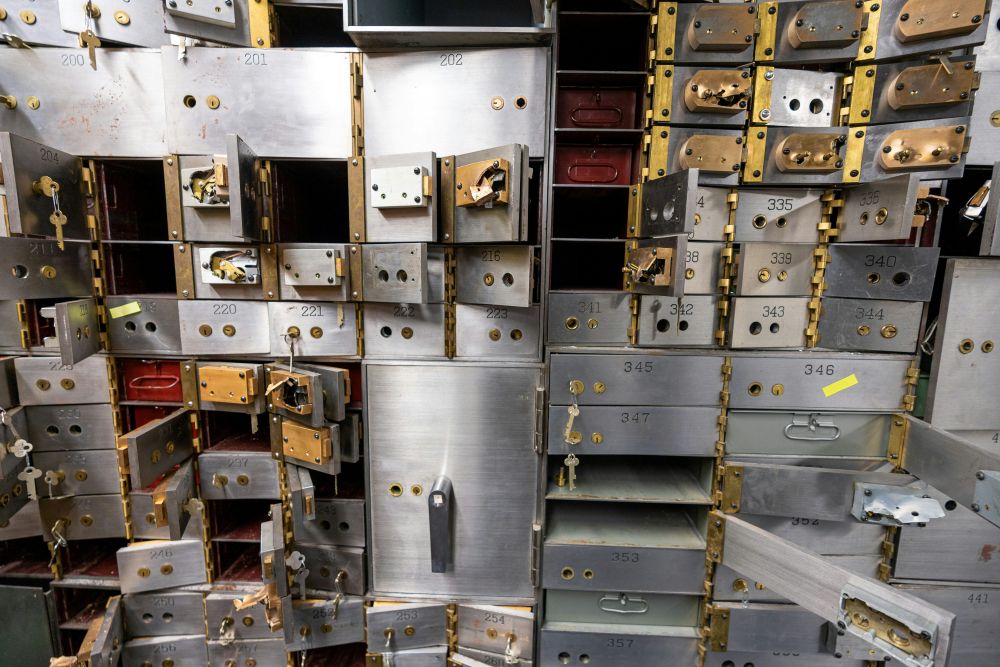
2. Bank safe-deposit boxes
Only a handful of UK banks still offer these, but they remain an option for smaller holdings, typically £100-£200 per year. The drawback is limited access hours.
3. Selling unused gold
If your gold is broken jewellery or pieces you haven’t worn in years, selling may be the safest route of all. It removes the storage question completely and converts dormant value into usable funds.
Gold prices have climbed more than 40% over the past year, so for many, it’s a good time to cash in rather than store.
So, do you really need a home safe?
Owning a safe feels responsible but unless you’ve done your research, invested in the right model, and checked your insurance terms, that sense of security can be more psychological than practical.
For small amounts of gold or a few sentimental pieces, a discreet hiding place at home might be perfectly adequate. But once the total value starts to climb or if you’re holding investment-grade coins, bars or heirlooms, a home safe just isn’t good enough.
Professional storage and insured collection services exist for a reason. They remove the risks which come with keeping high-value gold in a domestic setting: theft, fire, loss, or disputes over insurance claims. With specialist handling, your gold is stored in temperature-controlled, monitored facilities and insured from the moment it leaves your door to the moment it’s secured in the vault.
You can keep your gold locked away and hope it’s safe, or you could find out what it’s really worth. Discover what your gold’s worth with a free valuation from Gold Bank.