
We’ve said it before and we’ll say it again. Gold is special. Not only is it one of the Earth’s densest metals, with superior malleability and ductility – as well as natural brilliance – it is also one of the most easily recyclable metals there is.
But surely all metals can just be melted down?
Hmm, it’s not quite as simple as that. If you tried to melt down copper for instance, it would oxidise quickly, pick up impurities along the way – as well as lose mass.
To make it suitable for manufacturing again, it would need significant extra refining before its conductivity and performance were up to industrial scratch.
Another example is lead; it melts down easily which makes it practical to reclaim, but as it absorbs impurities during the process it is tricky to clean without repeated chemical refining.
Gold, however, barely raises an eyebrow in the furnace. It handles high heat with minimal oxidation, refuses to degrade through repeated melting, and can be purified back to 99.9% purity or better without losing density or its structure.
That is exactly why gold sits at the very top of the circular metals world. It can be recycled, reimagined, reclaimed and reused – whether that’s bars, coins, jewellery or gold that is used in industrial settings. And it also keeps its value!
Why gold recycling matters
People are increasingly aware that the gold items they buy, wear and later sell have an environmental and economic footprint.
Gold costs energy to mine, it is a finite resource and mining can have various negative ecological consequences such as deforestation, habitat destruction, water and air pollution. There are also ethical issues with gold as a mined commodity as it can be linked to conflict – fuelling wars and instability, while illicit trade can provide income for armed groups and regimes.
This doesn’t occur everywhere of course, and there are protections to prevent this from happening.
The good news is, recycling gold works for everyone. For those asking from an environmental perspective, recycling drastically reduces the need for mining. For those asking from a practicality perspective, recycling is often the most efficient path for gold they want to sell later, especially if that gold already exists as jewellery or household scrap.
Gold’s material properties for recycling
Gold’s recycling ability is a direct result of its physical and chemical properties:
- Gold does not rust or corrode
- Gold does not weaken when melted
- Gold conducts electricity without degradation
- Gold can be chemically separated from other alloys and contaminants
- Gold retains material density, purity and economic value through the recycling process.
These fundamentals make it the ideal for recycling, and while most metals and materials have a finite number of reprocessing cycles before they degrade or lose structural integrity, gold does not.
Gold’s circular existence
All the gold that has ever been mined is still in circulation today. It is virtually indestructible and can be repurposed and recycled. It may have changed form, owner and application, but the atoms remain the same through every life cycle.
Gold sources include:
- Gold held in central bank reserves
- Coins and bullion held by investors
- Industrial gold within electronics, aerospace and medical sectors
- Consumer gold jewellery
- Scrap gold reclaimed from workshops and households.
Types of gold recycling
- Industrial gold recycling
Industrial gold often comes from inside electronics, medical devices like pacemakers, aerospace tech, telecoms hardware and workshop or manufacturing bi-products where the metal exists in tiny amounts, circuit coatings or gold-plated contact points. It is used in these sectors because it resists corrosion, conducts power and stays biocompatible (i.e. you can put it in a human body without it reacting or being rejected).
When recycling industrial gold, you cannot put it straight in the furnace or the refinery in its original format. First, it must be chemically extracted and separated from coatings, non-gold metals and composite material mixes. Because the incoming mix can contain trace contaminants, alloys, adhesives and chemical coatings, the process nearly always requires specialist extraction techniques and repeated purification stages to recover as much of the gold as possible without compromising purity.
Industrial recycling is brilliant at reclamation, but the amounts of gold it works with are often microscopic which means trace recovery losses are common, and the efficiency rate tends to be much lower than recycling consumer gold or jewellery scrap.
- Jewellery and consumer gold recycling
Jewellery has a major advantage over industrial scrap because gemstones, clasps, springs and other non-gold parts can be mechanically removed before melting, which keeps contamination low and makes the refining process more efficient. As the gold content of jewellery is also more dense by gram than industrial gold, it means there is simply more material to recover and fewer unknowns during refining. Also, as all gold jewellery has a hallmark stamp, it gives a starting point for knowing the carat and composition.
That pre-melt depollution step means jewellery recycling introduces far fewer chemical curveballs than industrial extraction does. However, solder joints and strengthening or colouring alloys do have to be separated properly. If you melt before removing these elements, you’ll lose gold and invite contamination.
Proper recycling should always strip stones and impurities and run a full assay before the furnace stage (a full assay means testing the metal for its precise purity, weight in grams and alloy composition using professional equipment).
When done correctly, it’s possible to reclaim the true weight of gold, refine it back to purity and leave it in a format that’s ready to be recast.
The benefits of gold recycling
Let’s look into the points we discussed earlier in a bit more detail.
Environmental benefits
Recycling gold removes a huge chunk of mining’s environmental cost; every gram recycled is a gram that never needs to be dug out of the earth, which reduces land clearance, deforestation and water-heavy excavation work. Because gold is refined in controlled laboratory environments, it avoids the open-air chemical exposure which mining extraction can create, and it dramatically reduces carbon output and fuel logistics by shortening supply chains.
Economic and material benefits
Recycling gold creates real economic advantages because refined gold grain and bars are highly liquid and easy for bullion markets, jewellers and manufacturers to use straight away. It is often more efficient than refining newly mined or industrial scrap gold because the metal density is higher by gram, meaning less material is lost during processing. Gold also melts without degrading and can be refined back to 99.9% purity or better, which makes it simple to recast into workshop-ready grain or bullion formats.
In London, where precious metal trading moves quickly, recycled gold flows back into buyers’ hands and into active market supply much faster than most other metals can.
Ethical benefits
Recycling gold reduces the need for newly mined supply, which is where most ethical concerns around sourcing begin. By reclaiming gold that already exists above ground, we avoid dependence on unverified or conflict-affected mining routes and keep the metal within a transparent circular economy. Every batch is tested through a full assay so the gold meets strict compliance standards before it returns to jewellers, refiners or bullion markets.
What happens to gold during the recycling process?
Let’s take a step-by-step look.
1. Secure and documented handling
When you decide to recycle or sell a piece of gold jewellery, the first step is getting it to the people who will assess it. Most reputable services offer two routes; you can post the gold using an insured, trackable service or you can take it into a shop and hand it over in person. Whichever option you choose, the process should start with secure, documented handling so the metal is protected, logged and traceable from the moment it leaves your hands to the moment it reaches the valuation desk.
2. Full assay and valuation
Before any melting takes place, a professional assay is carried out. A full assay provides a transparent valuation based solely on the actual gold within the piece, not the stones, solder or decorative add-ons.
An assay involves:
- Weighing the item in grams
- Testing the purity and alloy composition
- Identifying contamination or mixed metals
- Estimating the recoverable gold content
3. Depollution and component removal
All non-gold elements must be removed before the furnace stage to prevent contamination and protect the refining chemistry.
Any non-gold elements can include:
- Gemstones
- Springs and clasps
- Mixed-metal fasteners
- Solder joints
- Decorative components
- Inner mechanisms in watches or chains
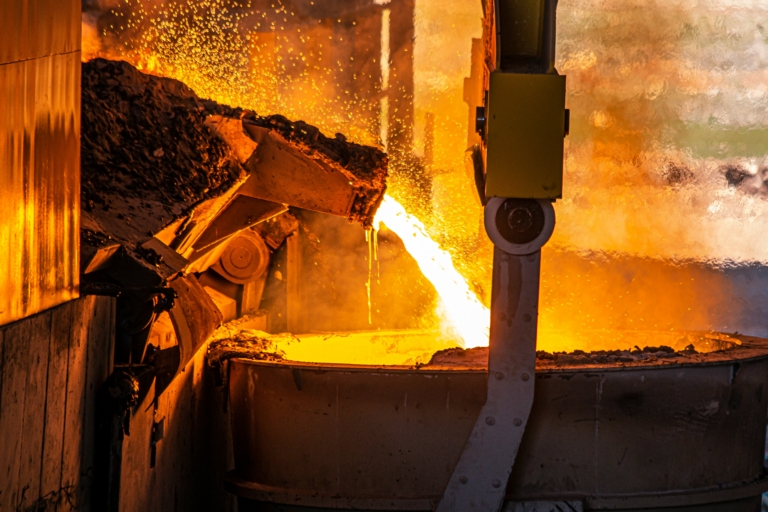
4. High-heat melting
Once cleaned, the gold is melted in a high-temperature furnace. During this phase:
- The metal liquefies
- Impurities begin to separate
- The gold is poured into controlled moulds
Melting doesn’t create purity, but it does prepare the metal for chemical refining.
5. Chemical and electrolytic refining
Refining is the stage where all the gold comes back together and impurities are removed. Techniques vary, but the goals are the same:
- Remove alloys
- Separate trace metals
- Eliminate contaminants
- Rebuild purity to 99.9% (999) or better
The refined gold is then formed into grain or bars. Grain is especially useful for jewellers because it melts quickly and blends cleanly into casting work.
6. Re-entry into the supply chain
Once purified, recycled gold can re-enter the economy in any way shape or form, such as:
- New jewellery production
- Bullion manufacturing
- Precision electronics
- Investment products
- Industrial and medical components
At this point, the gold has returned to the same quality as newly mined metal, with no loss of integrity or value. Isn’t that incredible?
What happens to the removed components?
Gemstones are separated during depollution and can be reused, resold or reclaimed depending on quality. Alloys and mixed metals are isolated during refining and diverted into appropriate recycling channels. They don’t affect the gold valuation but should still be processed responsibly.
Frequently asked questions about recycling gold
So we’ve covered the major facts about gold and recycling, but these are a few other questions we commonly get asked.
- Can I recycle my jewellery and get the gold back as a bar or grains?
No. When jewellery is recycled, the gold is melted and refined together with metal from many other sources, so your pieces become part of a larger mixed batch. Because of that, it’s not possible to return your specific gold to you as a bar or set of grains. You receive the value of the gold recovered, not the physical metal itself.
If you want to turn your existing jewellery into something new that you can keep, that’s a different service called remodelling, where a jeweller melts down your piece separately and uses that metal to create a new design. It doesn’t go through the full recycling and refinery process, so the gold stays “yours”.
If you’d prefer bullion, such as a bar or coin, that would need to be purchased separately after you’ve sold or recycled your old jewellery.
- Is gold-plated jewellery worth sending in for recycling?
Ordinarily, no. Gold-plated items contain only a very thin layer of gold which is nowhere near enough to recover through melting and refining. If you’re not sure whether something is plated, an assay or quick hallmark check can confirm it.
- Is recycling gold more sustainable than selling it as jewellery?
They’re very different decisions, but recycling is the most sustainable way to keep gold in circulation. It avoids new mining, reduces carbon output and turns unused pieces into high-purity metal that goes straight back into the supply chain. If a piece isn’t being worn and has little resale value as jewellery, recycling is often the best path.
- Can I recycle gold that’s tangled, dented or completely broken?
Yes. Recycling cares about purity and weight, not appearance. Knotted chains, snapped earrings, damaged clasps and crushed rings all recycle perfectly because the real value comes from the gold atoms, not the condition.
- How long does the recycling and valuation process usually take?
For most services, the timeline is fairly quick. Once the gold is received and logged, the assay and valuation often happen the same day or within 24–48 hours. Full refining takes longer, but your valuation and payout are based on the assay, not the finished grain or bar.
Find out more about how to sell your gold and see how easy it is to turn your old jewellery into real value.